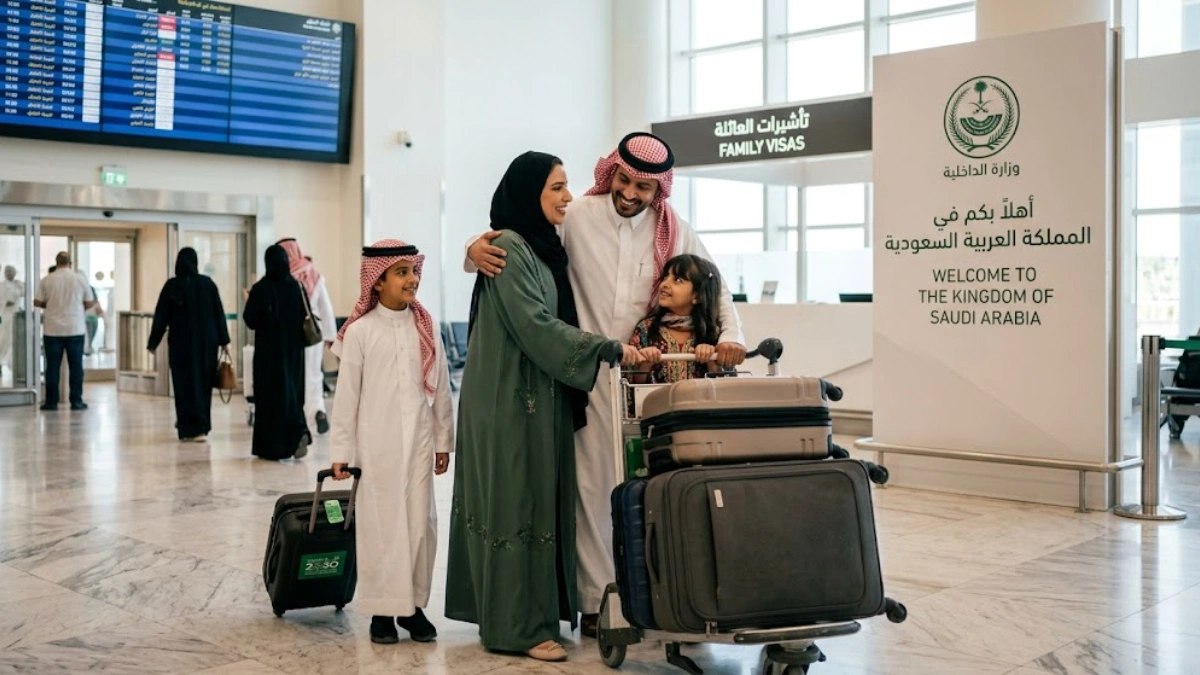
The Saudi Arabia Family Visa in 2026 allows expatriates working in the Kingdom to reunite with their immediate family members, including spouse and children. As part of Saudi Arabia’s ongoing Vision 2030 reforms, the process has become more digital, especially through platforms like Absher and Ministry of Foreign Affairs (Saudi Arabia), making applications faster and more transparent.
Despite the improvements, sponsoring dependents still requires meeting strict eligibility conditions, salary thresholds, and document attestation rules. This guide explains the full process in a simple, updated format for 2026.
What is a Saudi Family Visa?
A Saudi Family Visa (also called a dependent visa or family visit visa) is issued to expatriates holding a valid Iqama. It allows them to bring close family members to live in Saudi Arabia temporarily or long-term.
Eligible dependents include:
- Spouse (husband or wife)
- Children (sons and daughters)
- In limited cases, parents (with higher salary requirements)
Initially, dependents usually enter on a family visit visa, which can later be converted into a dependent iqama for long-term residence.
Eligibility Criteria for Sponsors (2026 Rules)
To sponsor family members in Saudi Arabia, you must meet several conditions:
1. Valid Iqama
Your iqama must be active and valid for at least 3–6 months.
2. Eligible Profession
Certain low-skilled job categories may not qualify for family sponsorship. Professional and skilled roles have higher approval chances.
3. Minimum Salary Requirement
The typical salary requirement ranges from SAR 3,000 to SAR 5,000+, depending on the number of dependents and profession.
4. Employer Approval
Your employer (kafeel) must approve the sponsorship request. Without company authorization, applications are rejected automatically.
Who You Can Sponsor
Saudi regulations clearly define eligible dependents:
| Dependent Type | Eligibility Condition |
|---|---|
| Spouse | Valid, attested marriage certificate required |
| Sons | Up to 18 years old |
| Daughters | No age limit if unmarried |
| Parents | Allowed in special cases with higher salary |
| Siblings | Not eligible |
Dependents are not allowed to work unless they obtain a separate employment visa.
Step-by-Step Family Visa Process in 2026
Step 1: Confirm Employer Eligibility
Before applying, confirm with your HR department that your job title allows family sponsorship. Many applications fail at this stage due to restrictions on certain professions.
Step 2: Document Attestation
All personal documents must be properly attested:
- Marriage certificate (for spouse)
- Birth certificates (for children)
Attestation process:
- Home country Ministry of Foreign Affairs
- Saudi Embassy in your country
- Ministry of Foreign Affairs (Saudi Arabia)
Without complete attestation, your application will not proceed.
Step 3: Apply via Absher Portal
Applications are submitted online through Absher:
Steps include:
- Login to Absher account
- Go to “Family Services”
- Select “Family Visit Visa Issuance”
- Enter dependent details (passport, nationality, DOB)
- Upload supporting documents
Processing usually takes 1 to 5 working days depending on verification.
Step 4: Visa Approval and Entry to Saudi Arabia
Once approved:
- Visa is issued electronically
- Dependents can travel within visa validity (usually 90 days)
- Entry is done using passport-linked visa approval
If the visa expires before entry, a new application is required.
Step 5: Convert Visit Visa to Dependent Iqama
After arrival in Saudi Arabia:
- Visit General Directorate of Passports (Jawazat)
- Submit required documents
- Pay dependent fees and insurance
- Complete biometric registration
Conversion must be done within 90 days of arrival to avoid penalties.
Estimated Cost of Family Sponsorship (2026)
Bringing dependents involves recurring expenses:
| Expense Type | Estimated Cost |
|---|---|
| Dependent levy | SAR 400/month per person |
| Iqama issuance | SAR 600–700/year |
| Medical insurance | SAR 500–1,500/year |
| Visa processing fees | SAR 200–500 |
Total yearly cost per dependent: approximately SAR 5,000–6,500
Common Reasons for Visa Rejection
Many applications are delayed or rejected due to avoidable issues:
- Missing employer approval
- Unattested or incomplete documents
- Incorrect passport or personal details
- Expired iqama during application
- Delayed conversion after arrival
Careful document preparation significantly improves approval success.
Important Rules for Dependents
1. No Employment Allowed
Dependents cannot legally work unless they obtain a separate work visa.
2. Exit-Reentry Requirement
All dependents need an approved exit-reentry visa for international travel.
3. Sponsorship Dependency
If the sponsor leaves Saudi Arabia or loses employment, dependent iqamas become invalid.
4. Age Rules
- Sons: Must transition after age 18
- Daughters: Can remain until marriage
Processing Time Overview
- Document attestation: 2–6 weeks
- Visa approval: 1–5 days
- Entry + iqama issuance: 2–4 weeks
Total estimated timeline: 3–8 weeks depending on documentation readiness.
FAQs
1. Can I sponsor my family without an iqama?
No, a valid iqama is mandatory for sponsorship.
2. How long does family visa approval take?
Usually 1–5 working days.
3. Can dependents work in Saudi Arabia?
No, they require a separate work visa.
4. Can parents be sponsored?
Yes, but only with higher income eligibility.
5. What happens if iqama conversion is delayed?
It may result in fines or legal penalties.
Final Thoughts
The Saudi Family Visa system in 2026 is more streamlined than ever due to digital transformation through platforms like Absher and government integration with Ministry of Foreign Affairs (Saudi Arabia).
However, success still depends on proper document attestation, salary eligibility, and timely iqama conversion after arrival. For expatriates, bringing family to Saudi Arabia is not just a legal process it is a major step toward long-term stability and quality of life in the Kingdom.