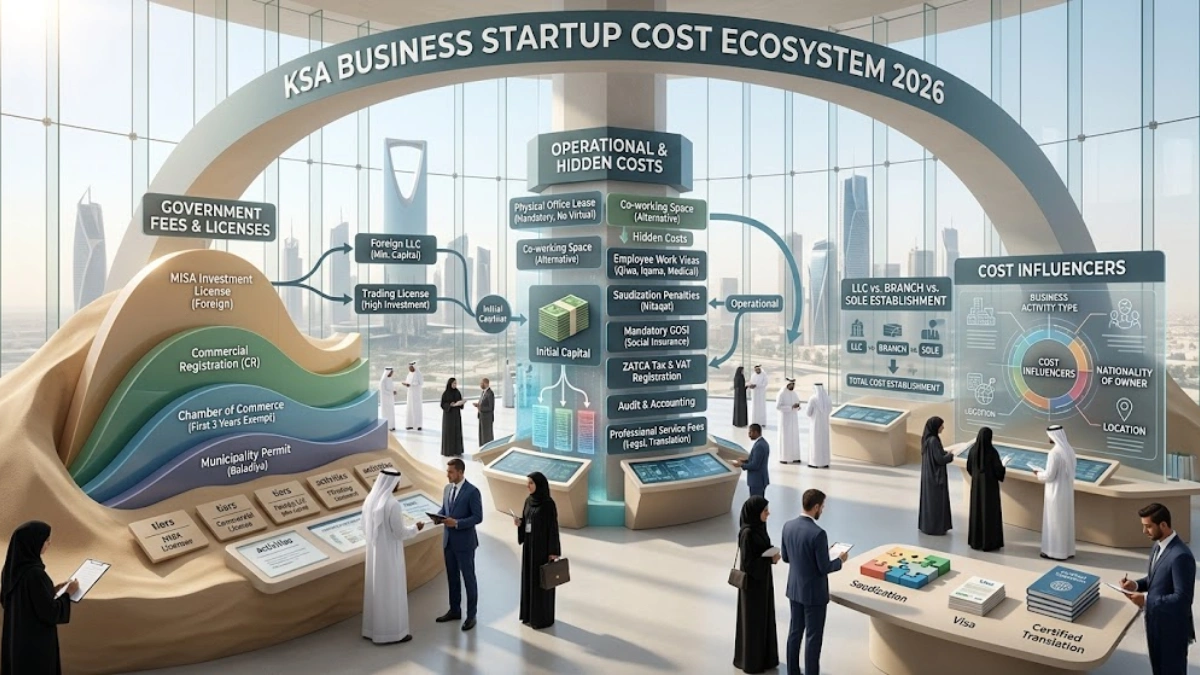
Starting a business in Saudi Arabia in 2026 is more accessible than ever due to digital reforms, investor-friendly policies, and Vision 2030 initiatives. However, while the process is streamlined, understanding the true cost of starting a business in Saudi Arabia is essential before investing.
Many entrepreneurs focus only on official registration fees but the real cost also includes licensing, compliance, visas, office space, banking, and “hidden” operational expenses. This guide breaks down everything clearly so you can budget accurately.
Overview of Business Setup Costs in Saudi Arabia
Business setup costs vary depending on:
- Business structure (LLC, branch, etc.)
- Foreign vs local ownership
- Industry type
- Location (mainland vs SEZ/free zone)
- Number of employees
Most foreign investors first obtain approval through the Ministry of Investment of Saudi Arabia and then proceed with company registration via the Saudi Business Center.
Main Cost Categories in Saudi Arabia Business Setup
1. Government Registration Fees
These are mandatory costs paid during company formation.
| Item | Estimated Cost (SAR) |
|---|---|
| Name reservation | Low |
| Investment license (MISA) | Medium |
| Commercial Registration (CR) | Medium |
| Chamber of Commerce | Low |
These fees are relatively standardized but vary by business type.
2. Licensing & Regulatory Costs
Certain industries require additional approvals.
| License Type | Example Industries | Cost Level |
|---|---|---|
| Municipality license | Retail, food business | Low–medium |
| Industry-specific approvals | Healthcare, engineering | Medium–high |
| Special permits | Logistics, telecom | High |
Highly regulated industries may require multiple approvals before operations begin.
3. Office Space or Virtual Address Costs
Saudi Arabia requires a registered business address.
| Option | Cost |
|---|---|
| Shared office | Low |
| Private office | Medium |
| Industrial warehouse | High |
| Virtual office (limited cases) | Low |
Location matters significantly Riyadh and Jeddah are typically more expensive than smaller cities or SEZ zones.
4. Visa & Employee Costs
If you plan to hire staff or relocate yourself, visa-related costs are significant.
| Item | Estimated Cost |
|---|---|
| Investor visa | Medium |
| Work permits (Iqama) | Medium per employee |
| Medical insurance | Medium |
| Recruitment costs | Medium–high |
You must also register employees with the General Organization for Social Insurance for social protection coverage.
5. Tax & Compliance Costs
All businesses must comply with tax regulations under the Zakat, Tax and Customs Authority.
| Tax Type | Who Pays |
|---|---|
| VAT (15%) | Most businesses above threshold |
| Corporate tax | Foreign-owned entities |
| Zakat | Saudi/GCC-owned companies |
Additional costs may include accounting software, auditing, and tax consultants.
6. Banking & Financial Setup Costs
Opening a corporate bank account is required but may involve indirect costs:
- Minimum balance requirements
- Account maintenance fees
- Transaction charges
- Compliance/KYC documentation support
Some banks may require additional financial verification for foreign investors.
7. Legal & Consultancy Fees
Many foreign investors hire consultants to speed up setup.
| Service | Cost Level |
|---|---|
| Company formation consultant | Medium–high |
| Legal translation | Low–medium |
| Document attestation | Medium |
| PRO services | Medium |
While optional, these services reduce delays and rejection risks.
8. Technology & Operational Costs
Once the business is registered, ongoing expenses include:
- Accounting software
- ERP systems (for larger companies)
- Website & domain setup
- Cybersecurity tools
- Payment gateway integration
These vary widely depending on business size.
Total Estimated Cost of Starting a Business in Saudi Arabia (2026)
| Business Type | Estimated Total Cost |
|---|---|
| Small LLC | Moderate (low–mid range) |
| Mid-size company | Medium |
| Large enterprise | High |
| Branch office | Medium–high |
Costs increase significantly if:
- You hire employees immediately
- You rent premium office space
- You operate in regulated industries
- You require fast-track approvals
Hidden Costs Most Investors Miss
Many entrepreneurs underestimate these “hidden” costs:
1. Document Attestation & Translation
Foreign documents must be legally translated and attested, which adds extra cost and time.
2. Saudization Requirements
Some industries require hiring Saudi nationals, increasing payroll costs.
3. Compliance Penalties
Late tax filing or incorrect registration can lead to fines.
4. License Renewal Fees
Annual renewals are mandatory for CR and business licenses.
5. Banking Compliance Delays
Delays in KYC approval can slow operations and increase setup costs.
Cost Comparison: Mainland vs Free Zone vs Branch Office
| Structure | Setup Cost | Ongoing Cost | Flexibility |
|---|---|---|---|
| Mainland LLC | Medium | Medium | High |
| Free Zone Company | Medium | Low–medium | Export-focused |
| Branch Office | Medium–high | Medium | Limited independence |
How to Reduce Business Setup Costs in Saudi Arabia
- Choose the correct business activity early
- Prepare all documents before applying
- Use digital submission platforms
- Start with minimal office space
- Hire consultants only for complex cases
- Avoid unnecessary licensing upgrades
Why Saudi Arabia Is Still Cost-Effective for Investors
Even though setup costs exist, Saudi Arabia offers strong long-term value:
- 100% foreign ownership in many sectors
- No personal income tax
- Large consumer market
- Strategic global trade location
- Government incentives under Vision 2030
FAQs
1. What is the minimum cost to start a business in Saudi Arabia?
It depends on the structure, but small LLC setups typically require moderate investment including licensing and basic setup costs.
2. Is Saudi Arabia expensive for foreign investors?
Initial setup costs can be moderate, but long-term operational costs are competitive compared to global markets.
3. Do I need a local partner?
Not always. Many sectors allow 100% foreign ownership with MISA approval.
4. What is the biggest hidden cost?
Employee visas, Saudization requirements, and compliance penalties are often overlooked.
5. Can I start with a low budget?
Yes, but business scope and industry selection must match your budget realistically.
6. Are taxes high in Saudi Arabia?
Corporate tax applies to foreign ownership, but there is no personal income tax.
Final Thoughts
Starting a business in Saudi Arabia in 2026 is more accessible than ever, but understanding the full cost structure is critical for success. While government fees are relatively straightforward, hidden costs like compliance, staffing, and operational setup often have a bigger impact on your budget.
With proper planning and the right structure, Saudi Arabia remains one of the most profitable and strategic business destinations in the world.